


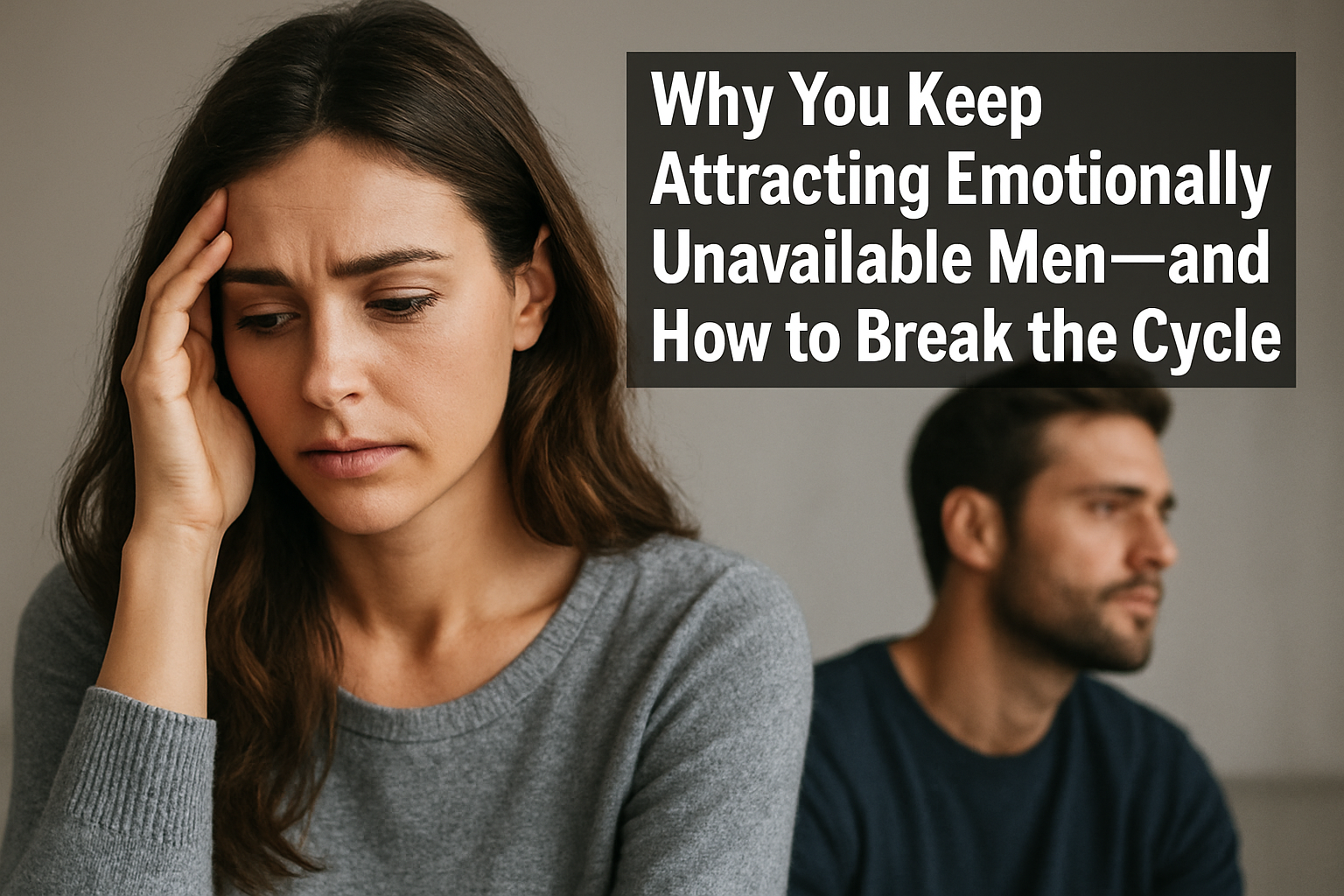
- You’ve been drawn to emotionally unavailable men due to an inner landscape shaped by past attachment patterns; awareness and small, repeatable actions can shift your trajectory.
- Learn to recognize and pause automatic reactions, set clear non-negotiables, and use practical checks (like a 48-hour reply rule) to protect your energy.
- Cultivate healthier relationship habits through boundaries, emotional availability audits, and healing practices that rewire limiting beliefs.
- Progress comes from consistent, evidence-based dating: prioritize steady availability over charisma and slow down to test compatibility before deep commitment.
- Introduction
- 1. The Unavailable-Ready You: Understanding Your Inner Landscape
- 2. Slow-Build: How Inconsistent Partners Mirror Your Nervous System
- 3. The Earning Love Trap: Beliefs That Keep You Striving for Impossible Approval
- 4. Boundaries as Breakthrough: Establishing Clear Standards for What You Accept
- 5. Emotional Availability Audit: Assessing Partners Before Investing
- 6. Healing Tables: Tools to Rewire Your Relationship Beliefs
- 7. Reframing Hope: Cultivating Realistic Expectations in Love
- FAQ
- Conclusion
- Identify the core beliefs that keep drawing you to unavailable men and test them against current realities.
- Differentiate healthy attraction from cues that reset your nervous system to seek inconsistency, using a simple two-question check before dating.
- Practice concrete steps to shift toward self-worth and available partners, such as a 30 day dating plan and a boundary checklist.
- Notice how you respond to small emotional offers from someone you like.
- Identify patterns where you withdraw after intimacy or chase when it’s absent.
- Track moments when you feel seen without rushing to fix the other person.
- Set a 48 hour rule to respond to a meaningful message, reducing impulsive pressure.
- Verdict-based interactions: you pause to decide a relationship’s value only after the next message or gesture lands.
- On/off availability: contact spikes after you pull back and recedes after you lean in.
- Emotional yo-yo: conversations swing between warmth and detachment without clear growth.
- Know your baseline. Name the exact standard you chase, such as flawless communication or unbreakable availability, and write it down.
- Set non negotiable needs in concrete terms. For example, specify boundary expectations and minimum emotional support without qualifying them as conditional love.
- Practice choosing you with action steps. When boundaries are tested, pause, ask yourself if you’d still respect them if the effort varied, and decide from that stance.
- Emotional availability: a partner who can name and share feelings, not just narrate events. For example, they respond to your vulnerability within 24 hours.
- Consistency: reliable communication patterns, not sporadic bursts followed by silence. For instance, daily check-ins and timely replies within a reasonable window.
- Respect: boundaries honored in words and actions, including how they talk about you to others. Observe if they avoid put-downs and honor your stated limits in conversations with friends.
- State needs clearly in early conversations and revisit them if they shift. Use concrete examples like, “I need weekly in-person time.”
- Pause before responding when a boundary is tested; a calm reply is more persuasive than a heated reaction. Try the 3-second pause rule to reduce knee-jerk reactions.
- Document patterns. If a behavior repeats, reassess whether the person fits your standards. Keep a brief log of incidents and outcomes to inform decisions during next steps.
- Red flags: inconsistent communication, rhetoric without accountability, avoidance of future planning, and dismissive responses to your feelings.
- Green flags: naming emotions clearly, steady warmth with boundaries, aligned actions and words, and respectful engagement during disagreements.
- Observe how they handle vulnerability. Do they share honestly or retreat when you disclose something personal?
- Attachment-focused therapy to explore early bonds and current dating choices.
- Cognitive-behavioral techniques to challenge automatic thoughts about worthiness.
- Emotion-focused work to name and regulate feelings that drive attractors toward unavailable partners.
- Journaling prompts that surface unconscious wiring, such as: “What belief did I just act on as if it were true?”
- 20-minute mindfulness or somatic checks to notice urge moments before you respond to a text or invitation.
- Redirection rituals that replace old reflexes with healthier ones, like pausing to name needs before replying.
- Aim for gradual openness rather than full disclosure on week one.
- Look for consistency over charisma. Words matter, but actions echo louder.
- Set a timer in your mind: if someone checks every box now, you still test the fit over time.
- Pause before you escalate plans beyond casual contexts.
- Prioritize individuals who align with your non-negotiables in both talk and action.
- Trust your observations in the first month as a guide, not a verdict.
- What signals should I trust in early dating? Look for consistent actions over several weeks. Words matter, but reliable communication, follow-through, and visible effort are stronger indicators of availability. For example, if a date initiates plans, confirms times, and checks in after events, that signals real interest.
- Why do I keep returning to unavailable partners? A pattern often reflects unconscious beliefs about worthiness. Shifting that pattern starts with recognizing which internal scripts you’re following and choosing differently in small, repeatable ways. Try a 48 hour rule: if a message goes unanswered beyond 48 hours, pause replying until you’ve assessed your own needs.
- Can distance protect me from unavailable partners? Distance can reduce immediate pressure, but availability is shown in communication quality and reliability, not proximity. Use that as your guiding metric. If someone only messages sporadically or never commits to plans, it’s a red flag regardless of distance.
- What’s a practical first step to change this cycle? Start with a boundaries check: identify one non-negotiable and practice communicating it clearly on a first date or early in dating. Examples include a commitment to timely replies or a rule about honesty from the start.
- How does self-love play into this? Self-worth acts as a compass. When you value your needs, you’ll notice red flags sooner and resist patterns that lead to unavailability. Keep a brief daily reflection to confirm your needs and set a micro-boundary if they’re challenged.
- Know your non-negotiables and practice stating them early.
- Audit potential partners for consistent action, not just hopeful words.
- Reframe hope with realistic timelines and safe experimentation in dating.
Table of Contents
Introduction
Why this pattern shows up in relationships
You’ve probably noticed a familiar type showing up again and again. The magnetism isn’t about luck or bad taste; it’s about an unconscious pattern that pulls you toward emotionally unavailable partners. Your history shapes your default beliefs about love, so you end up chasing what feels familiar, even if it hurts.
Think of it as a mirror your nervous system holds up. If your early caregivers were emotionally distant, your attachment system learns to seek that ache, hoping maybe this time it will be different. The result is a cycle where inconsistency reads as warmth, and distant behavior signals safety to your brain.
What you will learn and how to apply it
By the end, you’ll know what to notice, what to change, and how to choose differently so love feels grounded, secure, and deserving of your best effort.
1. The Unavailable-Ready You: Understanding Your Inner Landscape
Attachment styles and how they shape attraction
Your attachment blueprint colors every dating choice. An anxious style might chase closeness even when it isn’t available, while avoidant tendencies can push you toward walls that keep genuine connection at bay. Secure patterns tend to attract similar partners, creating steadier progress. Knowing your style helps you spot why you’re drawn to inconsistency and what to adjust first.
For example, someone with anxious attachment may misread a partner’s casual text as a sign of withdrawal, prompting overchecking and pressure. An avoidant person might misinterpret closeness as suffocating, then pull away just as commitment deepens. Awareness lets you pause automatic reactions, reducing mixed signals in early dating.
Attachment is not fate. It’s a lens you can reframe with awareness, practice, and small, repeatable steps. The goal is to resize your default from seeking validation to inviting presence and reciprocity that matches your needs. Start with one concrete change, like naming your needs in a calm moment before a date.
Uncovering your own emotional availability
<pTake a quick inventory of your current emotional landscape. The question isn’t just what you want in a partner, but how open you are to receiving it. If you routinely suppress need, fear vulnerability, or micromanage how love should feel, you may be signaling processed unavailability to others.
Concrete steps you can take this week include journaling a short daily entry on what you needed, what you received, and how you reacted. This helps you spot patterns that block intimacy and test safer ways to respond in real time.
Simple checks to start:
2. Slow-Build: How Inconsistent Partners Mirror Your Nervous System
Why inconsistency feels familiar and safe
Your brain interprets mixed signals as contact. Quiet gaps can resemble closeness, while sudden attention feels exciting in the moment. Over time, this push-pull becomes a default rhythm your nervous system associates with care and progress, even when it hurts.
This is not about choosing chaos. It’s a felt sense that intensity signals connection. When the cadence shifts, your body moves from hopeful to guarded, making steady ground feel suspicious or boring.
Recognizing patterns that signal a cycle
3. The Earning Love Trap: Beliefs That Keep You Striving for Impossible Approval
Where the ‘earn love’ mindset comes from
You likely learned to equate love with achievement. Praise came for results, not for authenticity. In dating this becomes chasing perfection, linking worth to outcomes, and offering affection as a reward for self-sacrifice or rigid control.
If you expect others to prove your value, red flags get overlooked. The pattern may feel noble or efficient, yet healthy love isn’t about fixing or outperforming yourself. It’s two people choosing each other as they are. For real world clarity, think about a relationship you left because you felt you had to earn every compliment or apology.
Replacing perfectionism with healthy self-worth
4. Boundaries as Breakthrough: Establishing Clear Standards for What You Accept
How to define non-negotiables
Non-negotiables are the lines you will not cross. They protect your emotional safety and signal your standards to potential partners. Define them with specificity so they’re easy to spot in action, not just in theory.
Start with a quick audit of dealbreakers you’ve tolerated in the past. Then translate each into a measurable standard you enforce from the first date forward.
Practicing boundary-setting in dating and relationships
Boundaries are learned through small, repeatable actions. Treat each dating interaction as a chance to practice and refine.
5. Emotional Availability Audit: Assessing Partners Before Investing
Red flags and green flags that predict healthy availability
An availability audit helps you separate signal from noise before you invest emotionally. Look for patterns that show up consistently over time, not just in a single moment.
A practical dating checklist
Use this checklist on early dates and in the first weeks of dating to gauge healthy availability.
| Aspect | Healthy signal | What it means |
|---|---|---|
| Communication | Consistent replies within a reasonable timeframe | Reliability and consideration |
| Emotional naming | They describe feelings and needs clearly | Emotional literacy |
| Boundaries | Respectful boundary discussions and adherence | Self-regulation and respect |
| Accountability | Owns mistakes without blame-shifting | Trustworthiness |
| Future signals | Ideas about plans that include you in a balanced way | Stability and commitment readiness |
6. Healing Tables: Tools to Rewire Your Relationship Beliefs
Therapeutic approaches that support change
Changing love patterns isn’t about willpower alone. It’s about mapping old beliefs to new experiences. Therapeutic approaches can help you identify the scripts you learned and rewrite them with intention.
Daily practices and reflection exercises
Consistency matters. Small daily actions compound into clearer choices and healthier patterns.
| Tool | What it changes | How to use |
|---|---|---|
| Breath-based grounding | Calms the nervous system during tempting interactions | Inhale for four, exhale for six, repeat twice before replying to a message |
| Thought records | Identifies faulty beliefs about love | Capture situation, belief, evidence for and against, and a more balanced thought |
| Value reaffirmation | Reinforces core self-worth outside relationship status | Write three non-negotiables weekly and reflect on how you honored them |
7. Reframing Hope: Cultivating Realistic Expectations in Love
Balancing optimism with prudence
You can want romance and also protect your energy. Realistic hope means spotting when ideals blur into fantasy and tightening your dating radar accordingly. For example, if someone you just met claims you are soulmates after two chats, slow down and test the fit with concrete checks.
Creating space for secure, available partners
Space in dating terms means not rushing to label, commit, or invest before signals prove compatibility. It also means leaving room for partners who show steady availability. In practice, you might schedule first dates on weekends and keep weekdays open for multiple conversations before deciding to go exclusive.
| Approach | What it protects | How to practice |
|---|---|---|
| Optimism with checks | Your time and energy | Document patterns over 4 weeks before deep investment |
| Slow commitment | Emotional safety | Keep enjoying dating while assessing long-term compatibility |
| Evidence-based affection | Healthy attachment | Notice alignment between promises and daily behavior |
FAQ
These quick answers cover common questions you might have as you break the pattern of attracting emotionally unavailable men. Bella Kent offers practical steps you can apply today.
| Question | Core takeaway | Action |
|---|---|---|
| Trust signals? | Consistency over time | Track patterns for 4 weeks |
| Root cause? | Unconscious beliefs about worthiness | Identify and reframe beliefs with small steps |
| Early boundaries? | Non-negotiables | State one boundary clearly on date 1 |
Conclusion
Breaking the cycle starts with a clear pivot: you choose you first. When you raise your inner standard, you invite partners who meet you at the level you expect.
We’ve explored how your inner landscape shapes attraction, the pattern of slow-build and inconsistency, the trap of earning love, and practical boundaries that guard your energy. The work is about alignment between what you say and what you accept from others.
As you build self-worth and rewrite unconscious scripts, you create space for secure, available partners. It’s a gradual process, but each small choice reinforces a healthier pattern and moves you closer to the love you deserve.