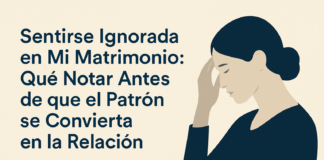



Feeling Alone in Marriage: The Part Nobody Explains Until You’re Already in It is that loneliness can happen while someone is sitting three feet away from you, asking whether you paid the electric bill.
I have spent more than a decade sitting with couples who are shocked by this feeling. They assumed loneliness was for people who were single, grieving, or physically isolated. Instead, they are married, sharing a home, raising children, coordinating schedules, and still thinking, I don’t think anyone really knows me anymore.
Let’s face it — marriage can feel like a sitcom sometimes, minus the laugh track. But when the silence becomes your emotional home, it stops being a quirky rough patch and starts asking for your attention.
Table of Contents
What this article covers
• What marital loneliness actually feels like
• The patterns that quietly create emotional disconnection
• How to start a conversation without turning it into a prosecution
• When to choose couples therapy, individual support, or safety planning
How to use this guide
Read this as a way to get clearer, not as a test you have to pass. Some marriages need a reset. Some need deeper repair. And some situations need protection before repair is even on the table.
TL;DR
The short version
Feeling lonely in a marriage does not automatically mean the marriage is over. It often means an intimacy gap has been growing through small missed moments, unequal emotional labor, unresolved resentment, stress, or a communication breakdown.
What to do first
Name the pattern specifically, ask for one concrete change, and pay close attention to your partner’s response. Willingness matters more than a perfect first conversation. Fear, control, humiliation, or retaliation are not relationship “communication issues”; they are safety concerns.
Key Takeaways
What I want you to remember
• You can feel lonely while living with, parenting with, and speaking daily to your spouse.
• Emotional disconnection usually builds through repeated small ruptures rather than one dramatic betrayal.
• A partner does not have to read your mind, but they do need to be willing to hear your reality and respond with care.
• Couples therapy can help when both people can participate honestly and safely. Individual therapy can still be deeply useful if your spouse will not go.
The decision point that matters most
The question is not simply, “Am I lonely?” The more useful question is: When I tell my spouse I am lonely, do they become curious, defensive but reachable, dismissive, or frightening? Those responses point toward very different next steps.
Why You Can Feel Alone While Married
Loneliness is about connection, not proximity
Loneliness is subjective. The CDC explains that social connection and wellbeing are related, and that a person can feel disconnected even when people are physically present. That distinction matters because a married person can have constant contact but very little emotional contact. CDC guidance on social connectedness puts language to something many spouses struggle to explain: being near someone is not the same as feeling held in their mind.
I hear versions of this all the time: “We talk all day, but it is logistics.” “He tells me everything that happened at work, but never asks how I am doing.” “She is physically affectionate, but I cannot bring up anything difficult without being shut down.”
That is not necessarily a lack of love. But it can become a lack of emotional safety, responsiveness, and intimacy.
The small things add up faster than people expect
You know what I find interesting? Couples often look for the one big explanation: an affair, a terrible fight, a major incompatibility. Sometimes there is one. More often, relationship fatigue accumulates through ordinary moments.
A bid for connection gets ignored because someone is scrolling. A hard day is met with advice instead of comfort. One spouse becomes the household project manager, the family memory keeper, the emotional temperature checker, and eventually the person who feels invisible.
The small moments are not small when they repeat.
Common loneliness patterns inside marriage
| Pattern | What it can sound like | What may be happening underneath |
|---|---|---|
| Logistics-only partnership | “We only discuss kids, bills, and chores.” | The relationship has lost protected emotional space. |
| Pursue-withdraw cycle | “The more I ask, the more they pull away.” | Different attachment styles or conflict defenses are colliding. |
| Unequal emotional labor | “I am always the one who checks in.” | One partner carries the invisible work of maintaining closeness. |
| Unresolved injury | “I cannot get past what happened.” | Resentment is blocking vulnerability and warmth. |
| Parallel lives | “We coexist well, but do not share much.” | Comfort and routine have replaced intentional connection. |
If the emotional work feels uneven, our piece on One-Sided Emotional Effort in Relationships may help you put words to the labor you have been carrying.
Signs the Marriage Has Become Emotionally Distant
You stop bringing your inner world home
One early sign is not constant fighting. It is often the opposite.
You get disappointing news and text a friend instead of your spouse. You have a worry, a hope, a strange little story from your day — and you do not even consider telling them. Not because you are hiding something, but because experience has taught you it will go nowhere.
That is a painful adaptation. It means your nervous system has started expecting disconnection.
Conversations feel functional but not intimate
A healthy marriage does not require hours of deep conversation every night. Real people get tired. People have deadlines, toddlers, migraines, aging parents, and dishes that somehow reproduce overnight.
Still, a marriage needs some reliable evidence that both people are emotionally reachable.
| More likely ordinary strain | More likely chronic emotional disconnection |
|---|---|
| A stressful season reduces energy for connection | Months or years pass with no repair or curiosity |
| One partner says, “I am overwhelmed, can we talk later?” and returns | One partner repeatedly avoids, mocks, or shuts down emotional topics |
| Conflict is uncomfortable but repair happens | Conflict leaves one person feeling unseen, blamed, or alone |
| Affection changes temporarily during stress | Emotional and physical closeness feel consistently absent |
You feel dismissed rather than merely misunderstood
Misunderstanding happens in every marriage. Emotional dismissal is different because your experience gets minimized, ridiculed, or treated as an inconvenience.
For example, “I do not understand why that hurt you” can be clumsy but workable. “You are too sensitive, this is why nobody wants to talk to you” is something else entirely.
If this distinction feels familiar, read Emotional Dismissal in Marriage for a closer look at the quiet ways dismissal can become a relationship pattern.
The Conversation That Can Change the Pattern
Do not lead with a verdict
The first conversation should not be a closing argument about everything your spouse has ever done wrong. I know that is hard. When someone has been lonely for a long time, they often arrive at the conversation with a very full filing cabinet.
But blame usually activates defense. Specificity makes a response more possible.
Try this structure:
Choose a time when neither of you is rushed, exhausted, intoxicated, or already fighting.
Name your internal experience without assigning motive.
Give one or two concrete examples.
Ask for a specific, repeatable change.
Ask what connection feels like from their side, too.
> “I have been feeling alone in our marriage. When I tell you about a hard day and the conversation moves straight to fixing it or changes topics, I end up feeling like my feelings do not have room here. Could we try ten minutes after dinner twice a week where we ask each other how we are really doing, without solving it right away?”
That script is not magic. Fair warning: if there is years-deep resentment, the first attempt may be awkward. But it gives the conversation a job beyond “be more emotionally available,” which sounds clear but is actually too vague to act on.
What to do when they say you are too sensitive
First, slow down. Do not immediately spend the next twenty minutes proving you are reasonable. That often becomes a trap.
You can say: “You may experience this differently, but I am telling you how it lands for me. I need us to take that seriously, even if we do not agree on every detail.”
Then watch what happens next.
• A reachable partner may be defensive at first but eventually ask questions, acknowledge impact, or agree to try something different.
• A stuck partner may keep debating facts while avoiding your emotional experience.
• An unsafe partner may punish you for bringing it up, threaten you, isolate you, monitor you, or make you fear the consequences of honesty.
Build connection around a real mechanism
“Spend more time together” is not wrong. It is just incomplete. If the issue is unequal emotional labor, an expensive date night will not fix the fact that one spouse still carries every school email, medical appointment, and relationship check-in.
Choose an experiment that matches the problem.
| If the problem is… | Try this for two weeks | Avoid relying only on… |
|---|---|---|
| Logistics-only talk | A 15-minute nightly check-in with no phones and one feeling-based question | More task planning |
| Pursue-withdraw conflict | A timed pause with an agreed return time | Chasing or stonewalling |
| Unequal emotional labor | Divide planning, care, and repair responsibilities visibly | Waiting for the overwhelmed spouse to “ask for help” |
| Resentment after an injury | One contained conversation focused on impact, accountability, and repair | Pretending it is over because time passed |
| Loss of shared meaning | A weekly ritual tied to values, faith, fun, movement, or future plans | Forcing romance before safety returns |
When Loneliness Is More Than a Marriage Problem
Depression, grief, trauma, and postpartum change can amplify distance
Sometimes the marriage is the main wound. Sometimes loneliness is being intensified by something happening inside one partner’s mental health or body.
The National Institute of Mental Health notes that depression can involve persistent sadness, loss of interest, hopelessness, sleep changes, and withdrawal. Those symptoms can make someone feel abandoned by a spouse — or make them withdraw from a spouse who is trying to reach them. NIMH’s overview of depression symptoms is worth reading if the loneliness comes with a broad loss of energy, pleasure, or hope.
Here is the nuance: depression does not make marital pain imaginary. A lonely spouse may be depressed and unsupported. A depressed partner may be struggling and causing real hurt through withdrawal. Both realities can be true.
Emotional neglect is not the same as emotional abuse
Emotional neglect generally describes a chronic failure to notice, respond to, or make room for emotional needs. It can be devastating, especially when it persists for years. But abuse includes a pattern of power and harm: intimidation, humiliation, control, isolation, threats, or coercion.
| Experience | What it may look like | Best next step |
|---|---|---|
| Emotional distance | Both partners are disconnected but can speak safely | Structured conversations or couples therapy |
| Emotional neglect | One partner repeatedly ignores emotional needs and refuses repair | Set boundaries, seek individual support, evaluate sustained change |
| Emotional abuse | Humiliation, intimidation, isolation, control, threats, or retaliation | Prioritize confidential safety support over joint therapy |
The National Domestic Violence Hotline explains that emotional abuse can be difficult to identify because it may leave no visible injury. Its explanation of emotional abuse is especially relevant if you feel frightened, monitored, systematically undermined, or cut off from people who care about you.
I want to be very plain here: couples therapy is not the right first move when one person is afraid of the other or is being controlled. Joint sessions can give an abusive partner more information to weaponize. Safety comes first.
Chronic loneliness affects more than your mood
The U.S. Surgeon General has framed loneliness and social disconnection as a public-health concern, not merely a private emotional failure. The Surgeon General’s connection initiative emphasizes that social connection supports health across the lifespan.
That does not mean marital loneliness causes every health problem. It does mean you deserve to take it seriously before it becomes the background noise of your life.
Choosing the Right Kind of Help
When couples therapy makes sense
Couples therapy is often useful when both partners can be honest, emotionally safe, and willing to practice new skills between sessions. It is especially appropriate when there is a communication breakdown, recurring conflict, fading intimacy, parenting stress, or a mismatch in love languages and attachment needs.
Choose couples therapy when:
• Both people can speak without fear of retaliation.
• Both acknowledge there is a problem, even if they disagree about its cause.
• Both are willing to examine their own contribution to the cycle.
• There is enough goodwill to try structured repair.
When individual therapy is the wiser first step
Individual therapy is not “giving up” on the marriage. Sometimes it is how you stop abandoning yourself while the relationship remains uncertain.
Choose individual support when:
• Your spouse refuses counseling.
• You need help distinguishing depression, grief, trauma, or burnout from relationship distress.
• You are repeatedly told your reality is not real and need grounded perspective.
• You need to decide what boundaries you can live with.
• You are afraid to bring up your needs at home.
I have seen people wait years for a reluctant spouse to finally agree to therapy. Sometimes that agreement comes. Sometimes it does not. Your wellbeing cannot be placed on indefinite hold.
A note on quiet marriages
Not every calm marriage is emotionally vacant. Some couples are private, steady, and less verbally expressive while still feeling deeply connected. The difference is whether the quiet feels peaceful or lonely.
Why Quiet Marriages Outlast Relationships explores why stability can be meaningful when it is paired with mutual care — not used as an excuse to avoid intimacy.
FAQ: Feeling Alone in Marriage
Why do I feel lonely even though I am married?
Because marriage provides proximity, not automatic emotional connection. You may share a bed, a calendar, and a last name while lacking responsive conversation, affection, shared meaning, repair after conflict, or the feeling that your spouse truly notices you. Loneliness often develops when your bids for connection are repeatedly missed or dismissed.
Is feeling lonely in marriage normal, and can a marriage survive it?
It is common enough that I see it frequently in practice, but “common” should not mean “acceptable forever.” A marriage can survive chronic loneliness when both people recognize the pattern and consistently participate in repair. It is much harder when one partner denies the problem, refuses accountability, or expects the lonely spouse to adapt indefinitely.
How do I know whether this is depression or a marriage problem?
Look at the scope. If you feel empty, hopeless, withdrawn, or unable to enjoy life across work, friendships, hobbies, and home, depression may be part of the picture. If the pain sharpens specifically around your spouse’s dismissal, avoidance, or lack of responsiveness, the relationship pattern may be central. Often, it is both. A qualified mental-health professional can help you sort that out without forcing a false either-or answer.
What if my spouse refuses counseling or I feel emotionally abandoned?
You can begin individual therapy, strengthen support outside the marriage, and set a clear boundary around what needs to change for you to remain emotionally well. If emotional abandonment includes fear, coercive control, threats, monitoring, humiliation, or isolation, seek confidential help rather than trying to solve it alone. If you are in the U.S. and feel in immediate emotional crisis or are thinking about harming yourself, call or text the 988 Suicide & Crisis Lifeline. If you are worried about abuse, a domestic-violence advocate can help you think through safe options.
Conclusion
Loneliness is information, not a verdict
Feeling alone in marriage is your inner life waving a flag. It may be telling you that the relationship needs new skills, more honesty, a fairer division of emotional labor, treatment for depression, or a serious reassessment of safety.
Take one honest step this week
Choose one concrete action: write down the pattern, have the first calm conversation, book an individual session, ask for a couples consultation, or tell one trusted person what has been happening. You do not have to decide the entire future of your marriage today. But you do deserve a life in which you are not invisible.
Sources and References
Public health and mental health references
• U.S. Surgeon General, Our Epidemic of Loneliness and Isolation: https://www.hhs.gov/surgeongeneral/priorities/connection/index.html
• Centers for Disease Control and Prevention, Social Connectedness: https://www.cdc.gov/social-connectedness/
• National Institute of Mental Health, Depression: https://www.nimh.nih.gov/health/topics/depression
Safety and crisis references
• National Domestic Violence Hotline, What Is Emotional Abuse?: https://www.thehotline.org/resources/what-is-emotional-abuse/
• 988 Suicide & Crisis Lifeline: https://988lifeline.org/