








Beige Flags: The Dating Trend Explained—and Whether It Actually Matters is really about one question: when does a harmless quirk become useful information about compatibility? Plenty of people get stuck here. They spot a mildly odd habit, label it a beige flag, and then wonder whether they are being discerning or simply letting dating fatigue do the driving.
You know what’s funny? Most beige flags are not alarming at all. They are the tiny behaviors that make you pause, laugh, or think, “Well, that is certainly a choice.” The point is not to diagnose someone because they eat the same lunch every day or narrate every episode of a show. The point is to notice what those habits might tell you about daily life together.
Table of Contents
| Section | What you will find |
|---|---|
| What beige flags mean | A clear definition and common examples |
| Why they get attention | How dating app culture turns quirks into data |
| When they matter | A practical way to assess compatibility cues |
| What to do about them | Questions to ask before rejecting someone |
| FAQ | Straight answers to common concerns |
Key Takeaways
Beige flags are usually neutral, not warnings
A beige flag is generally an unusual, repetitive, or mildly puzzling trait that is neither a dating red flag nor an obvious strength. Think of it as a personal habit that may be amusing, boring, confusing, or strangely specific.
They become meaningful through repetition and impact
One quirky behavior rarely tells you much. A pattern that affects communication, flexibility, kindness, or emotional availability can tell you more.
Your reaction is also useful information
If someone’s odd habit makes you feel warmly amused, that is one kind of compatibility cue. If it consistently irritates you or makes you feel unseen, that matters too—without automatically making either person “wrong.”
What Is a Beige Flag in Dating?
The simplest definition
A beige flag is a neutral-to-slightly-weird dating observation. It is not a relationship deal-breaker by default. It is simply a behavior that gives you a glimpse of how a person moves through ordinary life.
For example, a person might:
- Send a “good morning” message at precisely 7:03 every day
- Refuse to start a movie unless they have read the full plot summary first
- Use the same oddly formal phrase in every dating-app conversation
- Keep an intensely detailed ranking of local coffee shops
- Treat grocery shopping like a competitive sport
None of these automatically means, “Run.” They may mean nothing beyond personality. But they can also open a more useful conversation: Would sharing everyday life with this person feel easy, draining, or surprisingly delightful?
Beige flags versus red flags versus green flags
Let’s be real about this… people often treat every uncomfortable feeling as proof of a red flag. That shortcut can protect you in some situations, but it can also make dating feel like an exhausting audit rather than a chance to get to know another human being.
| Type of signal | What it usually suggests | Example | Best response |
|---|---|---|---|
| Red flag | Potential harm, disrespect, manipulation, or serious incompatibility | They pressure you after you say no | Set a boundary and consider ending contact |
| Beige flag | A quirky or neutral pattern that may reveal lifestyle fit | They need a detailed itinerary for every casual outing | Get curious before making a judgment |
| Green flag | A behavior that supports trust, respect, and emotional safety | They follow through and communicate clearly | Notice it and reciprocate when appropriate |
The difference is impact. A person who takes 20 minutes to choose a restaurant might be a little particular. A person who punishes you for choosing the “wrong” restaurant is showing you something very different.
Why the term can be misleading
The label sounds harmless, and often it is. Still, beige flags can be overlooked when they point toward a real mismatch in relationship dynamics.
People often dismiss their discomfort because the behavior is not dramatic enough to qualify as a red flag. Consider someone dating a partner who needs every weekend planned down to the hour. Planning itself is not the issue. The problem is when spontaneous plans, rest, and her own preferences are treated as inconveniences. What begins as “he is just organized” can eventually feel controlling.
That does not make organization bad. It means the effect of a habit matters more than its internet-friendly label.
Why Beige Flags Feel So Big Right Now
Dating apps make small details highly visible
Dating profiles ask us to form impressions quickly. You may see someone’s prompt about their very specific sandwich order before you have heard their laugh, watched them handle a disagreement, or seen how they treat a server.
That is part of why dating apps and real connections can be tricky: profiles are built from fragments. A beige flag can feel bigger than it is because it is one of the few pieces of information you have.
Before treating a popular online label as a meaningful dating insight, it helps to separate anecdotes from patterns. Basic guidance on researching a topic carefully makes a useful point here: start broad, ask better questions, and do not confuse the first thing you notice with the whole story.
Social media rewards tidy labels
A ten-second video about “the beige flag that ruined my relationship” is more shareable than a nuanced explanation of incompatibility. But real relationships are rarely that neat.
Quirks can look different over time. A partner who makes a color-coded spreadsheet for every weekend plan may seem rigid at first. The spreadsheet is not the issue. If he is happy to change plans when you have a hard week, his quirky system starts to feel thoughtful rather than rigid.
The behavior stayed the same. The relationship context changed its meaning.
Dating fatigue can turn quirks into evidence
When you have been disappointed repeatedly, your nervous system can become very efficient at scanning for reasons to opt out. That is understandable. Dating fatigue is real, and no one needs to force themselves through a connection that feels bad.
Still, ask whether you are responding to the person in front of you or to the accumulated frustration of past dates. If every small habit feels intolerable by date two, a short pause from dating may offer more clarity than another round of swiping.
When a Beige Flag Actually Matters
Look for the pattern beneath the quirk
A beige flag matters when it consistently reveals a value, need, or behavior that clashes with yours. The habit is surface-level; the pattern beneath it is what deserves attention.
| Beige flag on the surface | Possible pattern underneath | When it may matter |
|---|---|---|
| They only communicate through memes | Avoidance of direct emotional conversation | It matters if you cannot discuss needs or conflict clearly |
| They insist on the same routine every time | Preference for predictability | It matters if there is no room for your needs or spontaneity |
| They research every choice intensely | Caution or anxiety around uncertainty | It matters if decisions become impossible or controlling |
| They narrate everything they do | A habit, excitement, or a need for attention | It matters if you never have space to be heard |
Beige flags are often misread as negatives when they might simply indicate a different approach to relationships. The person who asks lots of questions before committing may not be emotionally unavailable. They may just be thoughtful and slow to trust. The question is whether they are moving slowly with honesty or keeping you in indefinite uncertainty.
Pay attention to flexibility
Flexibility is one of the best ways to assess whether a beige flag is harmless. Everyone has preferences. Healthy adults can usually hold preferences without making everyone else accommodate them.
Consider these two scenarios:
- Your date always eats at the same restaurant because they love it, but happily tries your favorite place for your birthday.
- Your date always eats at the same restaurant and sulks, criticizes, or withdraws if you suggest anything else.
The shared preference is not the issue. The ability to collaborate is.
This is also where healthy compromise in dating becomes more useful than a list of rules. You do not need identical habits. You need enough mutual respect that both people can have a real say in the relationship.
Notice how you feel after, not just during
Some behaviors are cute for an hour and exhausting over time. Others seem odd at first but become part of the warmth of a relationship.
After a few dates, ask yourself:
- Do I feel more relaxed or more on edge around this person?
- Can I be myself without managing their reactions?
- Do their quirks make room for my quirks too?
- When something feels off, can we talk about it without defensiveness?
That last question carries real weight. Compatibility is not about never being annoyed. It is about whether two people can repair small moments before they become resentment.
How to Respond to a Beige Flag Without Overreacting
Choose curiosity before a verdict
You do not need to interrogate someone over a weird habit. A light question can reveal plenty.
Try phrases like:
- “You always pick that same place. Is it your comfort-food spot?”
- “I noticed you like to plan ahead. Does spontaneity stress you out, or do you just enjoy organizing?”
- “You joke a lot when things get serious. Is humor how you handle nerves?”
These questions work because they address the behavior without assigning a motive. Fair warning: if someone responds to a gentle question with contempt, mockery, or intense defensiveness, that response may be more informative than the original beige flag.
Use a three-date reality check
For a minor concern, try a simple three-date reality check—not as a rigid rule, but as a way to avoid snap judgments.
| Step | What to observe | What it helps you determine |
|---|---|---|
| First interaction | Your immediate reaction | Is this merely unfamiliar, or does it feel genuinely uncomfortable? |
| Second interaction | Whether the behavior is consistent | Is it a one-off moment or a stable pattern? |
| Third interaction | Flexibility and communication | Can you discuss it, adapt together, and still enjoy each other? |
Do not use this approach when there is a clear safety concern, dishonesty, coercion, or disrespect. Dating red flags do not require extra chances to become clearer.
Know when to let a small mismatch be a small mismatch
Sometimes the answer is simply: “This person is fine, but not for me.” You do not need a courtroom case to stop dating someone. Attraction, ease, and lifestyle fit matter.
At the same time, avoid turning a preference into a moral judgment. A person who insists on being early is not necessarily controlling. A person who loves phone calls is not necessarily needy. A person with a niche hobby is not necessarily boring. They might just be a person whose rhythms do not match yours.
That distinction can be especially helpful when you are thinking about situationships in modern dating. Ambiguity often makes people overanalyze tiny clues because they are not receiving direct communication. A clear conversation about intentions is more useful than decoding someone’s playlist habits.
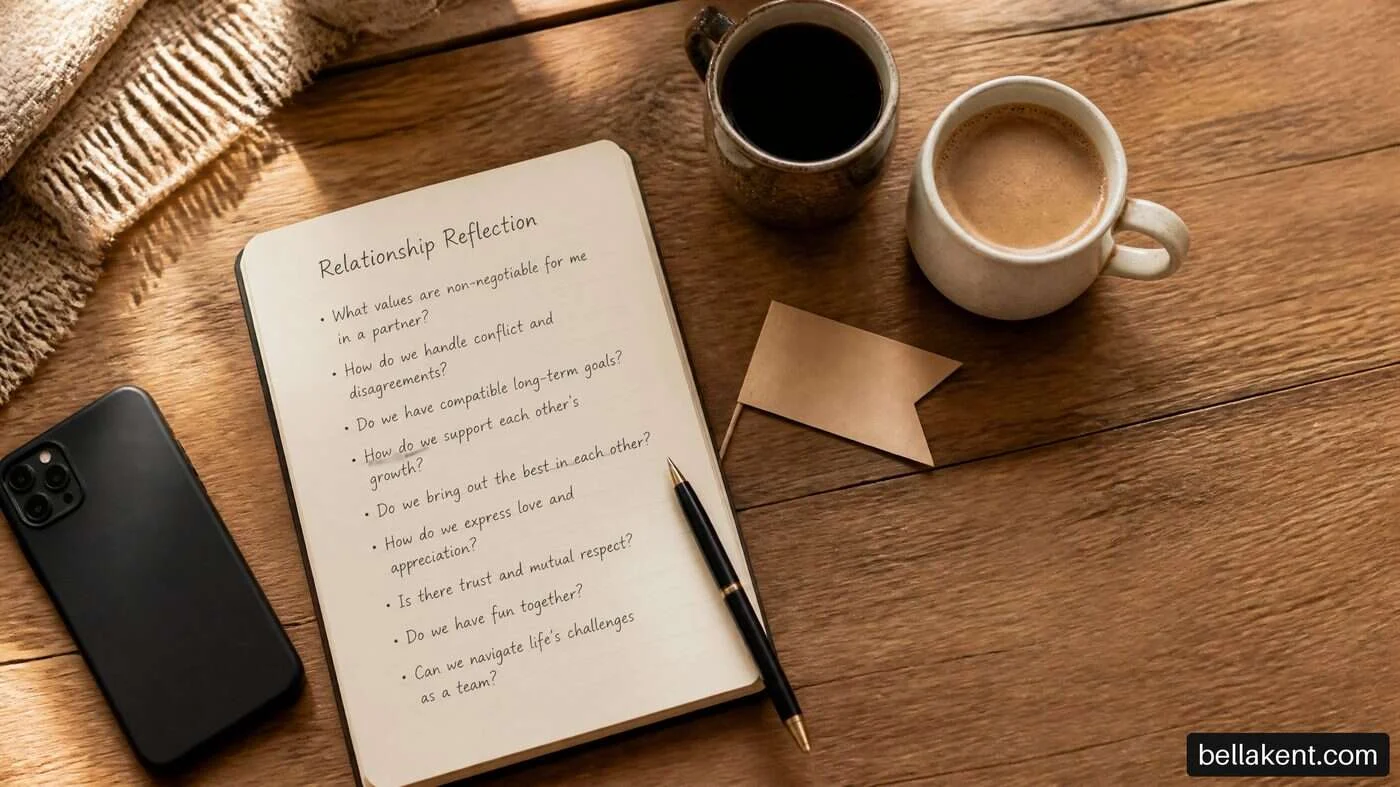
A Better Way to Read Compatibility Cues
Separate preference from character
Here is a practical filter: does the behavior describe a preference, or does it show how someone treats people?
| If it is mostly a preference | If it reveals character or relational capacity |
|---|---|
| They only drink one type of coffee | They ridicule your choices or refuse to consider your needs |
| They have a very specific bedtime routine | They become angry when life requires flexibility |
| They text in a style you find awkward | They disappear for days when accountability is needed |
| They love a hobby you do not share | They expect you to abandon your interests for theirs |
A preference may call for acceptance, negotiation, or a polite exit. A character issue calls for stronger boundaries.
Watch for mutuality
A relationship is not a test of whether you can tolerate someone’s quirks. It is a shared space where both people adjust, speak honestly, and remain interested in each other’s inner world.
If you are always translating their habits, accommodating their routines, and minimizing your needs, the beige flag may be pointing to an imbalance. If both of you can laugh, communicate, and make room for each other, it may become one of those stories you tell fondly years later.
Give unfamiliarity a little breathing room
Not every difference needs fixing. Many people confuse “not like me” with “not compatible with me.” Those are very different things.
A sensible way to think through an unfamiliar dating trend or label is to check how the term is being used, where it came from, and whether the examples actually match your situation. Resources on organizing questions around a topic and developing a focused research question reflect the same principle: get specific before reaching a conclusion.
Instead of asking, “Is this beige flag bad?” ask, “What happens when this behavior meets my needs, boundaries, and lifestyle?” That question gets you somewhere.
FAQ: Beige Flags in Dating
Are beige flags bad?
No. Beige flags are usually neutral. They become worth discussing when they repeatedly affect respect, communication, flexibility, or your ability to feel comfortable in the relationship.
What are examples of beige flags in dating?
Common examples include someone who re-watches the same show constantly, uses oddly formal language in texts, has a very specific food order, plans every outing in detail, or sends the same meme format every day. The behavior itself is less important than its impact on the connection.
Can a beige flag turn into a red flag?
It can, but not because quirks are secretly dangerous. It happens when the behavior reveals a larger pattern such as control, dishonesty, emotional unavailability, or disregard for your boundaries. For instance, loving a routine is neutral; demanding that you follow it without question is not.
Should I end things over a beige flag?
You can end dating for any reason, especially if you are consistently unhappy or uninterested. But if the issue is minor and the person otherwise feels respectful and compatible, a curious conversation is usually worth having before making a final call.
The Bottom Line
Beige flags are data, not a diagnosis
Beige flags can often be overlooked, but they provide useful insights into compatibility that should not be dismissed. They are not proof that a person is difficult, unhealthy, or wrong for you. They are invitations to notice patterns with a little more honesty.
Trust your standards and your sense of proportion
Keep your standards. Protect your peace. But leave room for people to be quirky, specific, and occasionally baffling—because, frankly, so is everyone.
If a behavior affects kindness, trust, or emotional safety, take it seriously. If it simply makes someone delightfully unlike you, it may be the beginning of a good story.
Sources and References
Research-method guidance used for evaluating online trend claims
- wikiHow: Research a Topic
- Semrush: Topic Research
- Johns Hopkins University Libraries: Develop a Research Question