
- Home-first yoga in 2026 emphasizes designing your space with accessible gear, flexible routines, and mindful rituals to support consistency and lifelong practice.
- Key setup elements include natural light, controlled sound, minimal clutter, and a small prop kit (mat, block, strap, bolster) tailored to your body.
- Personalization matters: adapt duration, intensity, and sequence to daily energy, time, and environment, using micro-to-extended session ladders.
Table of Contents
- Introduction
- 2. Lighting and Sound for Practice at Home
- 3. Selecting Props for a Flexible Home Practice
- 4. Creating a Simple, Sustainable Sequence Library
- 5. Personalization: Tailoring Practice to Your Space and Schedule
- 6. Technology and Digital Tools for Home Yoga
- 7. Environment and Mindset: Rituals that Support Consistency
- FAQ
- Conclusion
Introduction
Context and purpose
Bella Kent recognizes a shift in yoga practice where the home becomes central to consistency, personalization, and long-term benefits. This piece examines how at‑home environments shape your practice, from gear choices to routines and space optimization, anchored by real‑world patterns and trusted guidance that also consider design aesthetics.
What defines a home-first approach in 2026
A home-first approach prioritizes accessibility, adaptability, and intention. Key elements include:
- Accessible gear that fits your space and goals
- Routines you can sustain with minimal setup
- Space optimization for privacy, flow, and focus
2. Lighting and Sound for Practice at Home
Natural light strategies
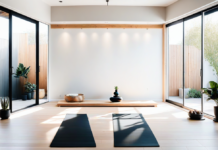
How much space do you need for home yoga? Most people need enough clear floor space to lie down with arms extended and to step comfortably around the mat. If your room is tight, prioritize an uncluttered mat-length area over a dedicated yoga room.
- Standard setup: Leave roughly one mat length in front of the mat and enough side clearance to extend both arms without striking furniture.
- Small-apartment setup: Place the mat parallel to a wall, move lightweight furniture temporarily, and keep props in one basket or lidded storage bench.
- Very limited space: Use chair-supported standing movements, seated breathwork, gentle twists, and balance work beside a stable wall or chair.
- Mat placement: Avoid slippery rugs, door swings, low tables, exposed cords, and direct afternoon sun that can make the surface hot or distracting.
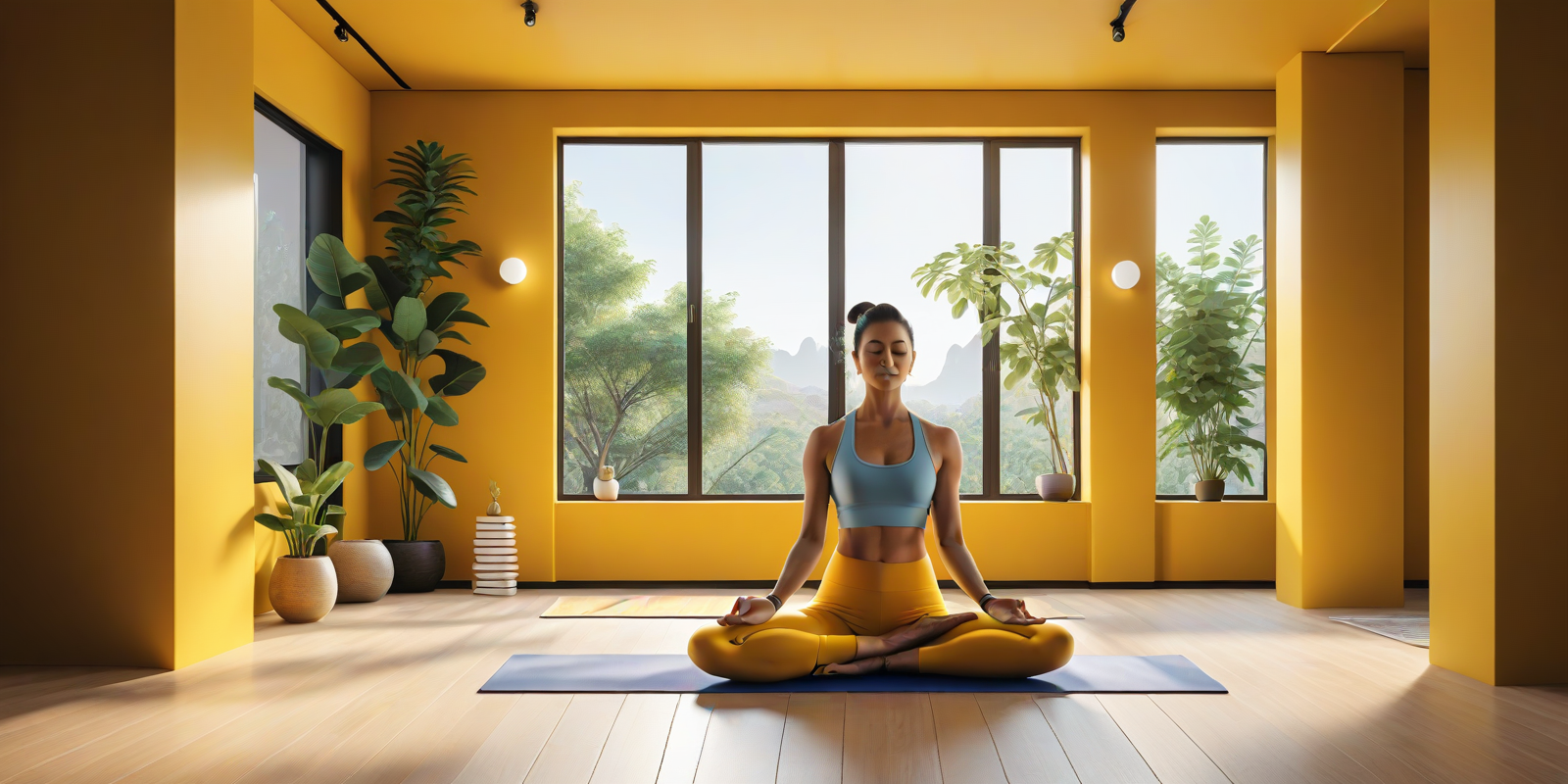
Natural light shapes energy, focus, and breath awareness. Use daylight as a cue for practice segments and posture checks.
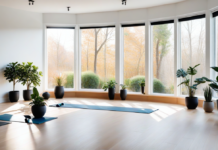
A well lit space reduces eye strain and supports a calm stance during holds. Position your mat to face a window when possible to align with daylight cycles.
When daylight is limited, opt for warm, diffuse lamps that mimic sunrise and keep glare off your mat during backbends. Dimmable LEDs offer quick adjustments.
- Track light direction and intensity across the day to signal warmups, core work, and cool-downs
- Avoid direct sun on the mat during peak hours to minimize heat buildup and distraction
- Paint walls in light, neutral tones to reflect illumination and sustain a serene practice environment
Soundscapes and quiet zones
Keep sound supportive, not dominant. Use audio only if it helps you notice your breath and move steadily; if you must raise your voice to speak over it, the volume is probably too high. For a more focused home yoga session, silence notifications before beginning and place the phone out of arm’s reach unless it is needed for class instruction.
- Choose instrumental music, low-key ambient sound, or quiet rather than tracks with abrupt lyrics or tempo changes.
- Prepare a single playlist or class before stepping onto the mat so you are not searching between poses.
- Use headphones only when they do not affect balance, spatial awareness, or your ability to hear household safety cues.
- When distractions are unavoidable, a short device-free practice can be more restorative than trying to follow a screen.
Sound quality influences breathing rhythm and focus through transitions from warm-ups to longer holds. Choose ambient layers that support steadiness without distraction.
Create a quiet zone with non-intrusive sounds that fit your routine. Soft instrumental music or nature ambience can anchor the breath without overpowering awareness.
- Set up in a low-traffic area, such as a dedicated corner or spare room, to minimize interruptions
- Prefer wireless playback and secured cables to prevent unexpected noise from movement
- Test white noise or gentle nature tracks during different holds to find your ideal balance
3. Selecting Props for a Flexible Home Practice
Essential props for beginners
Starting simple keeps your space uncluttered and your practice focused. Choose a compact set of props that offer options without overwhelming you.
- Yoga mat with adequate thickness for comfort on joints
- Yoga blocks to support alignment and accessibility
- Strap or belt to extend reach in forward folds and twists
- Bolster or cushion for restorative setups and longer holds
How to use props to deepen practice
Props are tools for precision and progression. Use them to explore new ranges, maintain safety, and tailor poses to your body.
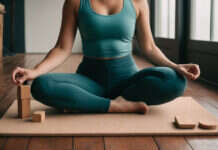
- In seated poses, place blocks under the hips to lift the pelvis and improve spinal alignment during meditation or twists
- Wrap a strap around the feet in forward bends and gradually shorten the strap length to access hamstring flexibility without forcing the spine
- Position a bolster behind the lower back in gentle backbends for controlled heart opening
- In balancing poses, keep a block at the fingertips or as a support under the lower hand to stabilize and build confidence
| Prop | Primary Benefit | Starter Setup |
|---|---|---|
| Mat | Cushion and grip for safe alignment | Non-slip surface, about 6 mm to 8 mm thickness for comfort |
| Block | Supports, alignment, and reach | One or two blocks within easy reach |
| Strap | Extends range without forcing joints | 6 to 8 ft length, moderate stiffness |
| Bolster | Provides depth in restorative poses | Firm, supportive cushion or compact bolster |
4. Creating a Simple, Sustainable Sequence Library
Foundational poses to anchor your practice
A stable core of poses keeps your home routine efficient and scalable. Start with cues that support breath, alignment, and gradual progression.
- Tadasana with awareness of posture and grounding through the feet
- Soften into gentle hip openers like bound angle or supported hip openers
- Cat-Cow for spine mobility and breath synchronization
- Standing forward fold to release the posterior chain and connect with your exhale
- Downward facing dog as a transitional pose for balance and shoulder awareness
Building short, effective routines
A simple way to start home yoga is to repeat a short, low-pressure sequence for one week before increasing duration or complexity. Begin with breathing and easy spinal movement, add basic standing and floor-supported poses, then finish with a quiet rest. Progress only when you can breathe steadily and leave the session without increased pain.
| Day | Practice focus | Suggested structure |
|---|---|---|
| 1 | Arrive and assess | 5–10 minutes of comfortable breathing, neck and shoulder circles, Cat-Cow, and rest. |
| 2 | Standing foundations | Tadasana, supported forward fold, gentle standing movements, and a short body scan. |
| 3 | Mobility | Cat-Cow, supported hip opening, seated twist, and savasana. |
| 4 | Rest or repeat | Choose the most comfortable earlier session and keep the pace slow. |
| 5 | Short flow | Breathwork, standing poses, forward fold, Downward Dog variation, and rest. |
| 6 | Balance and support | Wall- or chair-supported balance work, gentle mobility, and restorative positioning. |
| 7 | Review and choose | Repeat the session that felt sustainable; extend by only a few minutes if recovery was comfortable. |
Short sequences keep your practice consistent and adaptable to a busy home schedule. Focus on flow, stability, and resets between segments.
- Warm-up: breath work, neck and shoulder circles, light spinal movement
- Core segment: a couple of standing poses with mindful transitions
- Cooling phase: gentle twists and a restorative pose to wind down
- Reflection: brief body scan and hydration cue to reinforce habit
| Sequence Concept | Key Poses | Duration |
|---|---|---|
| Foundational | Tadasana, Cat-Cow, Downward Dog | 8-12 minutes |
| Short Flow | Standing poses with transitions, forward fold | 12-18 minutes |
| Reset & Restore | Seated twists, supported bridge, savasana | 6-10 minutes |
5. Personalization: Tailoring Practice to Your Space and Schedule
Assessing your real-time needs
A sustainable home practice should feel controlled during the session and manageable afterward. Track simple signals rather than judging progress by pose depth: sessions completed each week, steadiness in supported balance, ease of breathing, comfort in everyday movement, and how recovered you feel later that day or the next morning.
- Consistency: Note how many sessions you complete each week, including five-minute practices.
- Balance: Record the time you can stand comfortably with light wall or chair support when needed.
- Mobility: Notice whether ordinary movements such as reaching, sitting, or turning feel easier over time.
- Breath and stress: Rate breath comfort and perceived tension before and after practice using the same simple scale.
- Recovery: Reduce intensity, shorten the session, or choose restorative work if soreness, fatigue, or joint irritation lingers.
Safety check: Move within a comfortable range and do not force a pose to match a screen. Stop if you experience sharp pain, numbness, dizziness, or worsening symptoms. People managing an injury, recent surgery, pregnancy-related concerns, osteoporosis, uncontrolled health conditions, or marked joint instability should seek individualized guidance from an appropriate qualified clinician or instructor before progressing.
For general evidence and safety considerations, see NCCIH’s overview of yoga effectiveness and safety.
Your home setup shifts daily. Track how you feel before practice to guide today’s sequence and intensity.
- Energy level: high, moderate, or low
- Joint comfort: aches or stiffness to address
- Time constraints: minutes available vs a full session
- Environment cues: noise, light, and privacy levels
Example: on a busy morning, start with a short breath-focused micro-session to release tension before you begin daily tasks.
Adapting duration and intensity
For adults 50+ or anyone who prefers a joint-friendly practice, choose stability and ease over depth or speed. A chair, wall, blocks, and bolsters can reduce unnecessary strain while preserving the benefits of regular movement, breathing, and balance practice.
- Use a chair for seated warm-ups, supported standing poses, and transitions when getting to and from the floor is uncomfortable.
- Practice balance near a wall or sturdy chair rather than relying on open-floor balance challenges.
- For sensitive wrists, use fists, forearms, a wall-supported variation, or skip weight-bearing poses that cause discomfort.
- For sensitive knees, add cushioning under the knees, shorten kneeling holds, and prioritize hip and ankle mobility without forcing range.
- For low-back sensitivity, keep folds and twists gentle, use props for height, and avoid pushing into end-range positions.
- For hypermobility, favor slow, controlled strength and stable alignment rather than chasing the deepest available range.
Consistency beats volume. Create a ladder of options you can reach quickly.
- Micro-sessions: 5-10 minutes for busy days
- Moderate sessions: 15-25 minutes for steady progress
- Extended sessions: 30-45 minutes when time and space permit
- Intensity tweaks: slower tempo for accessibility or add balance challenges as needed
| Session Type | Typical Duration | Focus Area |
|---|---|---|
| Micro | 5-10 minutes | Breath work, gentle warm-up |
| Moderate | 15-25 minutes | Core stability, balance, mild sequencing |
| Extended | 30-45 minutes | Full-body mobility, strength, cooldown |
6. Technology and Digital Tools for Home Yoga
Apps and streaming options
Guided routines at home can support safety cues and adjustable tempos. Look for apps that align with your goals, whether mobility work, balance drills, or gentle therapy sequences. Favor instructors who clearly spell out modifications and common misalignments.
Streaming libraries blend live classes with on demand content, helping you fit practice into a busy week. For adults 50 plus, prioritize programs that show gradual progression and measurable milestones, such as checklists or skill badges.
- Search for beginner-friendly paths with slower transitions and simple pose variations
- Prefer classes with real-time feedback or explicit cueing to reduce guesswork
- Choose programs that weave breathwork and short mindful rests into sessions
How to curate quality content at home
The best digital yoga tool is the one that gives you clear instruction without making your practice dependent on constant screen time. Use an app or streaming class when you need structure, pacing, or pose options; skip it when a familiar five-minute reset better fits your energy, privacy, or attention.
- Choose voice clarity: The instructor should describe setup, breath, transitions, and modifications clearly enough that you do not need to watch every moment.
- Check pacing: Beginners and joint-sensitive practitioners usually benefit from slower transitions and time to enter and exit poses.
- Look for alternatives: Favor classes that offer wall, chair, block, strap, and rest options without treating them as lesser versions.
- Match the format to the need: On-demand classes suit repeatable routines; live sessions can add accountability but may move too quickly for independent modification.
- Keep the library small: Save a few reliable options for short, moderate, and restorative sessions rather than collecting more content than you can use.
Not every online resource fits your space or schedule. Build a focused library by evaluating pacing, instructor clarity, and safe alternatives for common joints. Keep a short list of trusted voices to avoid overload and maintain consistency.
- Record favorite sequences for quick replay on busy days
- Bookmark tutorials that demonstrate safe alignment and joint-friendly options
- Rotate instructors every 4, 6 weeks to gain new cues while staying within your comfort zone
| Content Type | Benefit | Considerations |
|---|---|---|
| On-demand classes | Flexible scheduling, repeatable formats | May lack real-time adjustments |
| Live streams | Community feel, accountability | Schedule dependent, potential crowd cues |
| Guided flows with slow tempo | Accessible pacing, safer progression | Requires clear audio quality |
7. Environment and Mindset: Rituals that Support Consistency
Creating a pre-practice ritual
A simple routine before you begin sets the tone for focus and consistency. Aim for a micro ritual that signals the transition from daily life to practice.
- Set a dedicated spot: a small, clutter-free area with a clear mat.
- Choose a cue: a breath, a word, or a soft bell to start.
- Prepare the space: lighting, temperature, and a brief centering exercise.
Overcoming common home-practice barriers
Home environments bring distractions, but small adjustments reduce friction. Prioritize accessibility and routine clarity.
- Protect time blocks: schedule consistent short sessions at the same time.
- Limit interruptions: use a visible sign or a quiet space during practice.
- Manage energy dips: have a ready-to-use 5-minute sequence for low-energy days.
- Address space concerns: store gear out of view when not in use to preserve ambiance.
| Barrier | Strategy | Benefit |
|---|---|---|
| Time pressure | Pre-scheduled blocks and micro-sessions | Maintains consistency without burnout |
| Distraction | Quiet zone cues and a dedicated mat | Improved focus and safer practice |
| Low energy | Short, breath-centered routines | Sustains habit and mobility |
FAQ
How thick should a mat be for home practice?
A mat around 6 mm to 8 mm can offer useful cushioning for many home practitioners, especially on hard floors. Choose a thinner, stable mat if balance and firm contact with the floor matter most; add a folded blanket or extra padding for kneeling comfort rather than using an unstable surface.
What background sounds support focus without distraction?
Quiet, soft instrumental audio, gentle ambient sound, or silence can support focus when it does not compete with breath or instruction. Keep volume low, prepare audio before practice, and turn off notifications to reduce interruptions.
Which props most benefit beginners and how should you use them?
A mat, one or two blocks, a strap, and a supportive cushion or bolster cover most beginner needs. Blocks create height and stability, straps extend reach without forcing joints, and bolsters make seated or restorative positions more comfortable.
Where can I find beginner-friendly at-home sequences?
Look for slow-paced classes that explain alignment, transitions, rest, and modifications. A beginner sequence should include breathing, a gentle warm-up, a few simple standing or floor poses, and a final rest rather than advanced transitions or intense stretching.
How do I measure progress without a studio instructor?
Track consistency, breath comfort, balance with appropriate support, ease in daily movement, and recovery after each session. Progress is not only a deeper pose; it can also mean practicing more regularly, moving with less tension, or recognizing when to rest.
Should I mix online and in-person sessions?
Yes, if it suits your goals and access. Home sessions offer flexibility and repetition, while a qualified in-person instructor may be useful when you want feedback on alignment, need individualized modifications, or feel uncertain about pain or symptoms.
What indicators signal a safe, sustainable pace for lifelong yoga?
A sustainable pace allows calm breathing, controlled transitions, and comfortable recovery afterward. Reduce intensity or seek individualized advice if pain is sharp, symptoms worsen, balance feels unsafe, or fatigue and joint irritation persist beyond a normal recovery period.
What makes home yoga different in 2026 compared to studio practice
You gain scheduling flexibility, greater privacy, and the ability to tailor routines to daily energy levels. The home environment supports lifelong consistency and gradual progression for healthy aging.
- How thick should a mat be for home practice?
- What background sounds support focus without distraction?
- Which props most benefit beginners and how should you use them?
Are there specific resources for adults 50+ seeking therapeutic benefits
Yes. Look for programs focusing on joint health, posture, and gentle mobility. Therapeutic yoga emphasizes safety cues, breathwork, and alignment to support mobility, stability, and balance.
- Where can I find beginner-friendly at-home sequences?
- How do I measure progress without a studio instructor?
How does technology aid a home practice without becoming overwhelming
Streaming and apps offer structured paths, but curate a small library of trusted instructors. Prioritize content with clear instructions and options for slower paces.
- Should I mix online and in-person sessions?
- What indicators signal a safe, sustainable pace for lifelong yoga?
Conclusion
Home yoga in practice today centers on thoughtful design, not convenience alone. Your space becomes a partner in movement, breath, and recovery, guiding everyday choices and long term habits.
At Bella Kent, practicality and refinement drive our recommendations. A well-considered setup, from mat selection to ambient sound, supports consistency without clutter.
- Prioritize a quiet, private space to reduce distraction and foster depth.
- Invest in a thick mat and a few flexible props to support safety and progression.
- Curate a short library of routines that address mobility, balance, and posture.
- Leverage digital tools to reinforce consistency without overwhelm.
Whether you’re starting anew or adapting a seasoned practice, a home-first approach supports lifelong yoga. It aligns with healthy aging goals, mobility, and stability, while remaining adaptable to your body over time.
References
- Now is a great time to cultivate an at home yoga practice. …
- Yoga for Longevity in 2026: A Simple Plan to Start at Home
- How To Start & Improve In Your Home Yoga Practice
- Absolute Beginners Yoga Course , March 2026 This 4-week …
- The Beginner’s Guide to Home Yoga Practice